


Argentinian wine
Argentinian wine comes from vineyards at the foot of the Andes, often at elevations of hundreds of metres. Mendoza is by far the most important region. The country is world-famous for malbec: dark, juicy and full of fruit.


Argentinian wine by region, grape and winery
Argentina revolves around one region and one grape. We have a dedicated page about Mendoza, malbec and two well-known wineries.

Mendoza
Argentina's largest wine region, with vineyards reaching high into the mountains.
About Mendoza →
Malbec
Originally a French grape, but it became big in Argentina. Blackberries, plums and violets.
About malbec →
Catena
One of Mendoza's best-known wineries, renowned for malbec and chardonnay from high-altitude vineyards.
About Catena →
Trapiche
A large, historic winery from Mendoza, with wines ranging from simple malbec to single-vineyard bottlings.
About Trapiche →High-altitude wine
Argentina is one of the largest wine-producing countries in the world. The vineyards lie in the west, in a long strip along the Andes. The climate is dry and sunny, with little rainfall. The vines get their water from the mountains: snowmelt is channelled to the vineyards. The altitude is a defining feature. Many vineyards lie at 700 to 1,500 metres, and even higher in the north. It is warm there during the day, but temperatures drop sharply at night. This gives the grapes plenty of colour and ripe fruit flavours while allowing them to retain their freshness. Spanish colonists were already planting vines here in the sixteenth century. In the nineteenth century, immigrants from France, Italy and Spain brought new grape varieties and their expertise.
Mendoza is by far the most important region. Well-known subregions include Luján de Cuyo and Maipú, close to the city, and the higher-altitude Uco Valley, with places such as Tupungato and Altamira. Malbec originally comes from France, from Cahors and Bordeaux. In Argentina, the grape proved so well suited to its new home that it became the national grape. Cabernet sauvignon, cabernet franc, bonarda and, for white wine, chardonnay are also grown here. Torrontés is the typically Argentinian white grape: floral and aromatic, especially from Salta in the north. In the south, in Patagonia, it is cooler and they also make pinot noir.
In brief
Seven bottles, from malbec to white malbec
Three malbecs in three styles: classic, pure and unoaked, and powerful, from the best vineyards. Then cabernet franc and cabernet sauvignon, a white wine made from blue grapes, and a high-altitude chardonnay.
Catena Malbec
Malbec in the classic style from one of Mendoza's best-known houses. Firm and dark, full of blackberries, cassis and blackcurrant.

Zuccardi Alambrado Malbec
This malbec does not come into contact with oak. This lets you taste the grape in its purest form: juicy, fruity and soft.

Trapiche Gran Medalla Malbec
Malbec from the best vineyards in the high-altitude Uco Valley. Powerful, complex and made to be savoured.

Argento Reserva Cabernet Franc Bio
Cabernet franc comes from the Loire and Bordeaux and is becoming increasingly popular in Argentina. Spicy, with red and black fruit.

Zorzal Gran Terroir Cabernet Sauvignon
Cabernet sauvignon from vineyards at an altitude of 1,350 metres, at the limit of where viticulture is still possible. Full-bodied, with freshness from the cool nights.
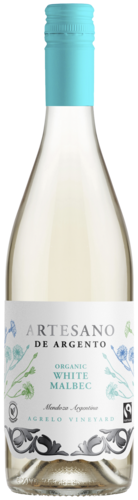
Artesano de Argento White Malbec
A white wine made from blue malbec grapes: the skins are removed quickly, so the wine remains colourless. Lively and fresh, with citrus and green apple.

Catena Appellation Tupungato Chardonnay
Chardonnay from high-altitude vineyards in Tupungato, in the Uco Valley. Full-bodied and creamy, with butter, pineapple, yellow apple and citrus.
How did a French blend grape become Argentina's pride? Read about it on our malbec page.
Dark fruit, violets and soft tannins
Blackberries & violets
Malbec smells of blackberries, plums and black cherries, often with a floral hint of violets. Oak adds vanilla, chocolate and tobacco. White wine smells of citrus, peach and tropical fruit.
Juicy and rounded
Argentine red wine is full-bodied and ripe, but thanks to the altitude it is not heavy. Malbec has soft, round tannins and a juicy flavor. Cabernet sauvignon is firmer.
Fruity and warm
Most wines finish dry and fruity, with a warm touch of alcohol and, in oak-aged wine, some spice.
Flavor profile of an average malbec from Mendoza. A white malbec or pinot grigio scores lower in intensity and higher in freshness.
How to serve Argentine wine
Malbec slightly chilled, white chilled, and a powerful malbec or cabernet gets some air first.
Red at 16 to 18 degrees
Malbec often has 13.5 to 14.5% alcohol. If you serve it too warm, you mainly taste the alcohol. It is at its best around 16 degrees: juicy and fresh. Put a bottle from a warm room in the fridge for a while.
More about wine temperature →Letting powerful wine breathe
A gran reserva or single-vineyard malbec and a full-bodied cabernet become softer when poured into a decanter half an hour beforehand. A fruity unoaked malbec can be poured straight away.
Decanters →White and rosé chilled
Pinot grigio, sauvignon blanc, torrontés and white malbec should be served at 8 to 10 degrees. A full-bodied oaked chardonnay can be served slightly warmer, around 10 to 12 degrees.
More about decanting →Argentine wine at the table
In Argentina, wine is part of the asado: meat grilled slowly over a wood fire. Malbec is its classic partner, but Argentine wine also pairs well with many other dishes.
Asado and beef
Entrecôte, picanha, ribeye and grilled sausage. Also delicious with chimichurri, the Argentine herb sauce made with parsley, garlic and oil.
Lamb and grilled vegetables
A rack of lamb, braised meat or grilled peppers and aubergine. Cabernet franc pairs beautifully with herb-seasoned dishes.
Burgers, pizza and empanadas
An unoaked malbec is smooth enough for everyday food: a hamburger, pizza, pasta or stuffed empanadas.
Fish, chicken and Asian food
A full-bodied chardonnay with salmon and chicken, a fresh pinot grigio or white malbec with fish and salads, and torrontés with mildly spicy Asian food.
The right glass for Argentine wine
Pour malbec into a spacious red wine glass so the dark fruit and violets come through clearly. For a powerful malbec or cabernet, choose a tall, large bowl; for white wine, a smaller glass. These are the glasses we recommend ourselves.


Everything you still wanted to know about Argentine wine
Can't find your question here? Read more about wine and food, or get in touch.
To wine and food pairing →What is Argentine wine?
Why is malbec so popular in Argentina?
Why are Argentine vineyards located at such high altitudes?
What is torrontés?
How much alcohol is in Argentine wine?
What do you eat with malbec?
Buy Argentine wine
Want the bottle at home right away? Order Argentine wine online from Gall & Gall. Gall & Gall has 80, 14 of which are on offer.
Artesano de Argento White Malbec
Prices as of October 9, 2026, as reported by Gall & Gall. You can find the current price and stock at Gall & Gall. Glazen.nl receives a small commission if you buy something through these links; you pay nothing extra. No under-18s, no alcohol.