RCR Invino Liqueur Glass 10 Cl - 6 Pieces

Nude Glass Pure Grappa Glass 8 Cl - 6 Pieces
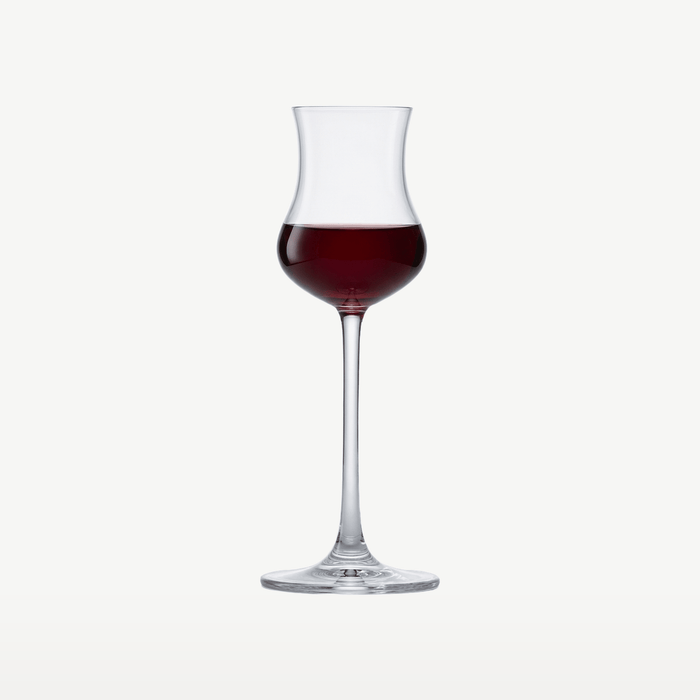
Nude Glass Vintage Port Glass / Grappa Glass 8.8 Cl - 2 Pieces
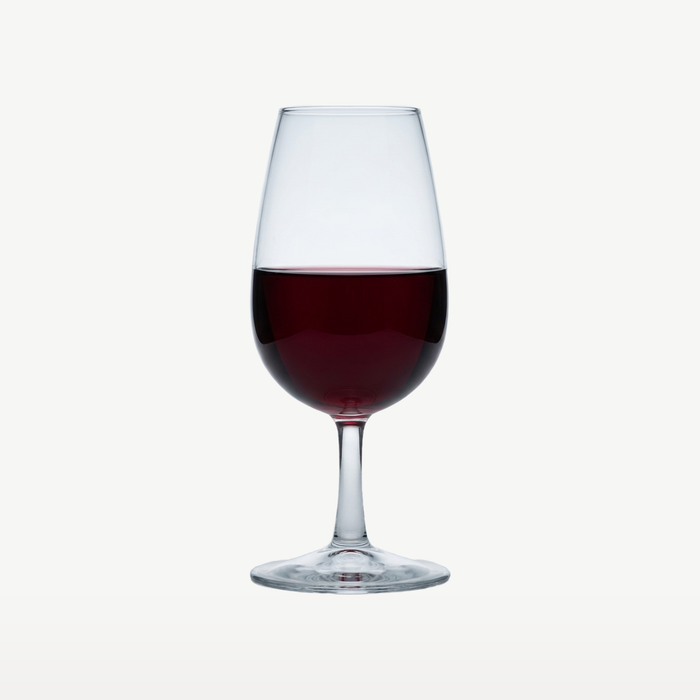
Pasabahce Tasting Glass/Port Glass 20 Cl - 12 Pieces

How to pour
an ice wine in
Put the bottle in the refrigerator for three hours. Serve ice wine at 6 to 8 degrees, a little cooler than most other sweet wines, because the cold keeps its high acidity sharp against the sugar. Take it out just before serving; it will warm up naturally in the glass.
Cut around the capsule just below the ridge on the neck, then wipe the rim clean. Center the corkscrew spiral on the cork and turn it straight down. Many ice wines come in a slim 37.5 cl bottle with a short cork, so don't screw it in too far. If it has a screw cap, skip this step.
Pour 5 to 7 cl, about a third of a small stemmed glass. Decanting isn't necessary, and air doesn't help much here: the wine is so concentrated that its aroma rises from the glass on its own. The small pour also keeps it cold to the last sip.
Recap the bottle immediately and put it back in the refrigerator. Ice wine is not fortified, so the alcohol doesn't protect it as it does port. Its high sugar and acidity will keep an opened bottle a little longer than a dry white wine, but expect it to last a few days.
What did you think of this explanation?
One click on a star is all it takes. If you’d like to add a comment, we’ll review it before it appears here.
Save this page
Send this page to your own email so you’ll have the explanation handy when you’re ready to pour. You’ll also get a € 5 discount code for orders over € 50, to use on the matching glasses.
The story
The idea behind ice wine is simple: water freezes, but sugar and acidity do not. If healthy grapes remain on the vine well into winter and it gets cold enough, the moisture inside the berries turns to ice. When the berries are pressed while frozen, that ice stays in the press, leaving only concentrated juice. That is also the risk of this method: the grapes have to remain healthy on the vine for months, and if frost never comes or arrives too late, the harvest is lost. That risk is reflected in the price.
The right glass
Ice wine is served in a small stemmed glass because a 5 to 7 cl pour sits as a shallow layer at the bottom of a regular wine glass and warms up quickly. In a bowl of roughly 9 to 14 cl, the wine stays cold and the space above it holds the aroma. There is no dedicated collection of ice wine glasses; the small bowls are in the port glasses and liqueur glasses collections. At 8.8 cl, pick 02 is the smaller of the two: a 5 cl pour fills more than half the glass, so choose pick 01 if you want space above the wine.

RCR Melodia Port Glass Nick and Nora 14 cl (6 pieces)

Nude Glass Vintage Port Glass / Grappa Glass 8.8 cl (2 pieces)
Both sets together € 49,90.
The right glassware
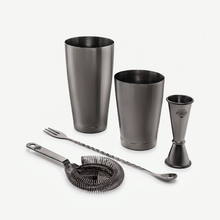
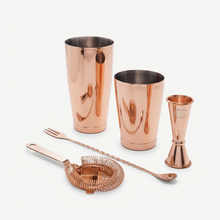
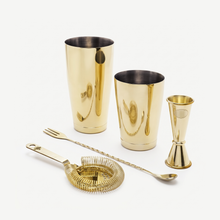
For ice wine, besides a glass, you'll mainly need a corkscrew and, since a 37.5 cl bottle is finished in two or three pours, a wine stopper. The bar tools below only come into play when the wine goes into an aperitif: a jigger to measure the small amount precisely and a bar spoon to stir it. These are the bar tools we use ourselves; find everything in our bar tools & cocktail sets.


Glassware set (our choice 01) + 2 bar tools together € 60,85.
What should you serve alongside it?
A small bottle of ice wine comes to the table at the end of the evening. These are the wines served earlier, from a glass of crémant beforehand to the white wine with dinner. Each drinks page lists the alcohol percentage, what it tastes like, which cocktails it goes with, and which glass you need.


Variations & twists
Riesling and Vidal are the classic grapes. Riesling naturally has plenty of acidity, which is exactly what you need with so much sugar; Vidal has a sturdy skin and so holds on better until the frost arrives. Ice wine is also made from blue grapes, giving it a reddish hue. Don't confuse ice wine with wine made from grapes frozen in a freezer after harvest: that's called cryo-extraction and isn't permitted under the German or Canadian designation. Want to read more? See all drinks and brands.
Serving tip
Pour small and cold, at 6 to 8 degrees, and no more than a third of a glass. The same rule applies here: the wine should be sweeter than what you serve with it, such as blue cheese, nuts, or an apple pie without extra sugar. A dessert that is sweeter than the wine only brings out the acidity.
Good to know
Why the grapes are pressed while frozen
Water freezes at zero degrees, while a concentrated sugar solution freezes only at a much lower temperature. In a frozen grape, the water is therefore ice, while the sugar, acid, and flavor compounds remain in a small amount of liquid. If the berry goes into the press in that state, the ice crystals stay behind and only the concentrated juice flows out. If the grapes thaw before pressing, the water mixes back in and the effect is lost.
How cold it needs to be
The harvest takes place at around seven degrees below zero. In milder weather, far from all the water in the berries is frozen, so too much liquid ends up in the press. Since this frost usually sets in in the middle of the night or early in the morning, the grapes are picked in the dark and taken to the press as quickly as possible, before they can thaw.
The risk reflected in the price
The bunches must remain on the vine for months after the regular harvest, and all sorts of things can go wrong during that time: birds, wind, rain, and rot. If the frost doesn’t come, or arrives only after the grapes have already spoiled, there is no ice wine that year. On top of that, frozen berries yield only a fraction of the usual amount of juice. That’s why the bottles are small and the price is high.
Eiswein, Icewine, and the designations
In Germany and Austria, the wine is called Eiswein and is one of the designations for wine made from particularly ripe or concentrated grapes. In Canada, it is called Icewine, a protected name with rules about how and at what temperature the grapes may be harvested. In both cases, the grapes must be frozen in the vineyard.
The difference from cryoextraction
With cryoextraction, harvested grapes are frozen in a freezer and then pressed. The process is technically the same, but the risk of leaving the grapes in the vineyard is eliminated, and the grapes haven’t spent months ripening on the vine. This method is not permitted under German or Canadian labeling rules, so wine made this way cannot be called Eiswein or Icewine there.
How much alcohol it contains
Ice wine usually has roughly 9 to 12 percent alcohol, less than a dry white wine. That’s because the yeast can’t cope with so much sugar and stops before it has converted all of it. The remaining sugar is what makes the wine sweet. The exact percentage is shown on the label.
Frequently asked questions
How is ice wine made?
Made from grapes harvested frozen on the vine, at around seven degrees below zero, and pressed while still frozen. The water in the berries is then locked up as ice and remains in the press, so only concentrated juice with lots of sugar and acidity comes out. If the grapes thaw before pressing, that effect is lost.
Why is ice wine expensive?
Because the grapes must stay healthy on the vine for months after the regular harvest, and frost has to arrive. If it doesn't, the harvest is lost. On top of that, frozen berries yield only a fraction of the usual amount of juice, and they're picked by hand in the dark and cold. That's also why the bottles are 37.5 cl.
At what temperature and in what glass should you serve ice wine?
Serve at between 6 and 8 degrees, in a small stemmed glass of roughly 9 to 14 cl. Pour 5 to 7 cl, about a third of a glass. In a regular wine glass, such a small amount sits as a thin layer at the bottom, warms up quickly and lets the aroma disperse. The stem keeps your hand away from the bowl, keeping the wine cold.
What is the difference between ice wine and cryo-extraction?
For ice wine, the grapes freeze in the vineyard and are pressed while still frozen. In cryo-extraction, harvested grapes are frozen in a freezer and then pressed. The result is similar, but without the harvest risk or the long period of ripening on the vine. This method is not permitted under German or Canadian designation rules.
Also delicious
Everything for your bar,
at one address
Hospitality-grade glasses, sold in sets. Order today, delivered fast.
Shop the glasses →